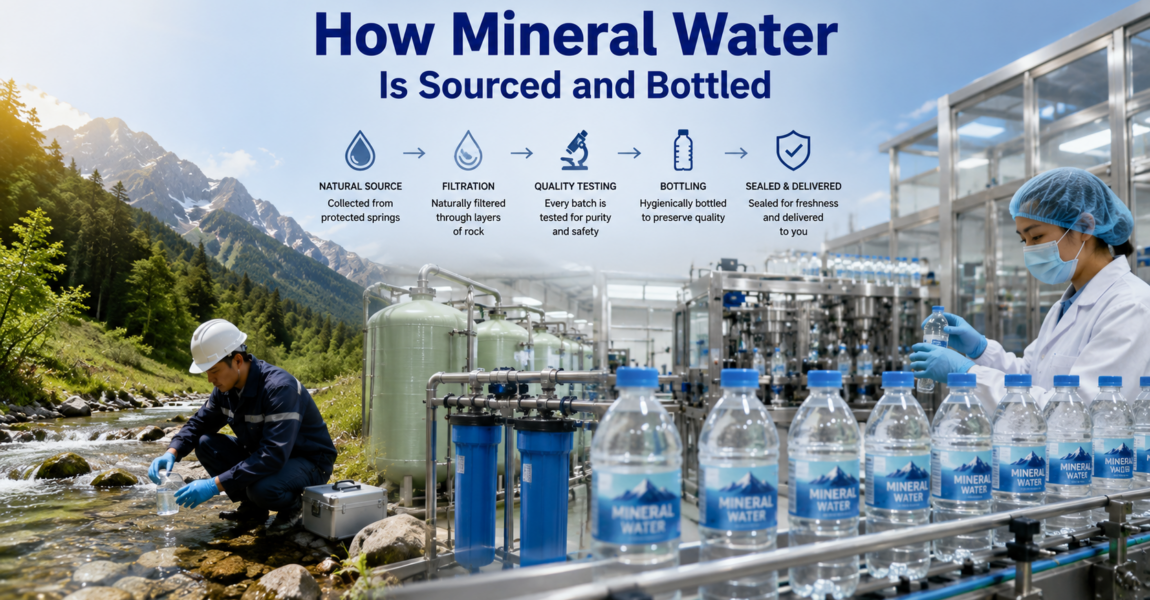
Mineral water, often seen as a premium choice, comes from some pretty unique underground sources you might not even know about. You’re probably wondering how it gets from deep within the earth all the way to your bottle, right? It’s a fascinating journey, and there’s a lot more to it than just filling up a container. You’ll discover the meticulous process that ensures its purity and unique composition. Experience pure, refreshing hydration with our 5-gallon bottled mineral water delivery, sourced with care and delivered for your convenience.
Where does this stuff actually come from?
You’re probably wondering, with all the talk about “natural” and “pure,” where does this water actually originate? It’s not just some stream they find and bottle up. No, we’re talking about very specific, underground sources that have been protected for centuries, often millennia, from surface contamination.
These aren’t just any old underground water sources either. To be classified as natural mineral water, it has to come from a specific, geologically and physically protected underground water table or deposit. This ensures a consistent composition of minerals and trace elements, which is really what sets it apart. Choose 500ml mineral water for naturally sourced, quality-tested hydration that’s perfect for work, school, travel, and everyday refreshment.
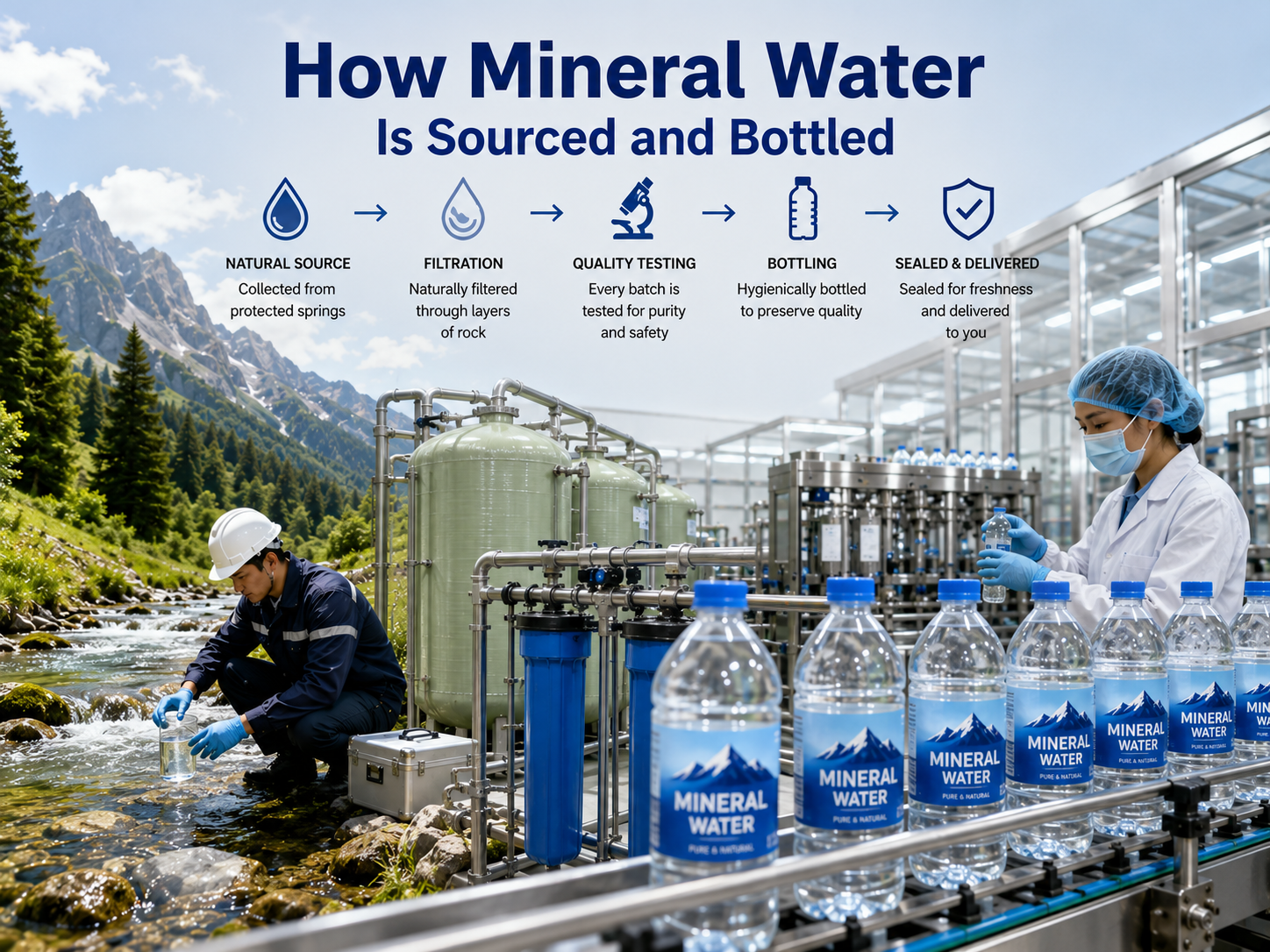
Locating these subterranean reservoirs requires a lot more than just digging a hole. Geologists use sophisticated techniques, often involving seismic surveys and detailed geological mapping, to pinpoint areas where water has collected over vast periods. They’re looking for specific rock formations that act like natural sponges.
Once a potential source is identified, test drilling begins. This is a delicate process, aiming to access the water without disturbing the surrounding geological strata. The goal is to reach the aquifer while preserving its natural integrity and preventing any contamination from the surface during extraction.
How the earth naturally filters things out
The journey water takes through various layers of rock and soil is perhaps the most fascinating part of its purification. As rainwater seeps down, it passes through sand, gravel, clay, and different types of bedrock. Each layer acts as a natural filter, stripping away impurities and particulate matter.
This slow, deliberate percolation isn’t just about cleaning the water; it’s also how the water acquires its unique mineral profile. Different rocks dissolve slightly as the water flows over and through them, enriching it with beneficial minerals like calcium, magnesium, and potassium.
Think of it like a giant, slow-motion coffee filter, but instead of coffee grounds, you have layers of ancient rock. This natural filtration process is incredibly effective, removing many contaminants that surface water might contain, long before it ever reaches the bottling plant.
It’s not just tap water in a fancy bottle, honestly
You might wonder if you’re just paying extra for glorified tap water, but that’s really not the case. Mineral water comes from a protected underground source, often deep within the earth, where it’s been naturally filtered through layers of rock for years, sometimes even centuries. This journey is what gives it its unique mineral composition.
Each source has a distinct geological signature, meaning the rocks it flows through impart different minerals in varying concentrations. This is why a bottle of mineral water from the Alps tastes different from one sourced in the Pyrenees; they’re not just adding a dash of magnesium at the bottling plant!
What’s the deal with those minerals anyway?
The minerals in your bottle aren’t just for show; they’re naturally occurring electrolytes like calcium, magnesium, and potassium. These are absorbed as the water travels through rock formations, picking up unique profiles that contribute to both taste and, for some, perceived health benefits.
Think of it like a natural fingerprint for the water. The specific balance of these dissolved solids is what sets mineral water apart, giving it that characteristic mouthfeel and often a slightly different flavor profile than purified or tap water.
Why they can’t add anything extra
You’re probably thinking, “Can’t they just sprinkle in some extra minerals to make it taste better or healthier?” The truth is, regulations are quite strict here. By law, nothing can be added to natural mineral water, nor can anything be taken away.
This means what you get in the bottle is exactly as it emerged from the ground, aside from some basic filtration to remove any impurities like sand. Any alteration would mean it couldn’t be called natural mineral water anymore, which is a pretty big deal for brands.
This strict adherence to its natural state is what gives mineral water its integrity. It’s about preserving the original composition, ensuring that the water’s unique properties, developed over its long underground journey, remain untouched for you to enjoy.
Here’s how they get it into the bottle without ruining it
Once the mineral water reaches the bottling plant, which is often right at the source to minimize transport and contamination, the goal is pretty simple: get it into a bottle without changing a thing. You’re dealing with a naturally pure product, so any processing needs to be minimal and, frankly, invisible. Think about it – you don’t want to mess with what nature already perfected.
This means no chemical disinfection, no added anything, and certainly no filtration that would strip away those unique minerals. The entire process is designed to protect the water’s original composition and microbiological purity, exactly as it emerged from the earth.
Keeping the germs away without chemicals
You might wonder how they keep things sterile without, you know, sterilizing the water itself. The secret lies in maintaining an ultra-clean environment from the moment the water leaves the ground until it’s sealed in its bottle.
Bottling plants use advanced filtration systems for the air, and all equipment is regularly cleaned and sanitized, often with steam or hot water. It’s about preventing contamination rather than treating it afterward, which is a subtle but absolutely critical distinction.
Speeding through the assembly line
From the moment bottles enter the line, they’re on a fast-paced journey. The empty bottles, usually PET or glass, are first rinsed thoroughly with ozonated water or sterilized air to ensure they’re absolutely pristine before filling.
Then, the mineral water flows into the bottles at incredible speeds, often using gravity or low-pressure systems to prevent any agitation that could affect its natural properties. The filling machines are incredibly precise, ensuring each bottle gets the exact right amount.
Capping happens almost instantaneously after filling, sometimes in less than a second, to prevent any airborne particles or contaminants from reaching the water. This rapid-fire sealing is crucial for maintaining the water’s purity and extending its shelf life without needing preservatives.
Why I think the source is actually everything
You know, for all the talk about filtration and bottling processes, it truly boils down to where that water originates. That initial geological journey, sometimes taking decades, is what gives mineral water its unique signature. It’s not something you can just replicate in a lab, no matter how sophisticated the technology gets. The mineral composition, the Types of Water – Bottled | IBWA, and the taste profile are all etched by the specific rocks and soil it flows through.
Think of it like a fine wine; the terroir – the soil, climate, and topography – dictates its character. And it’s the same for mineral water. A spring in the volcanic regions of Italy will taste vastly different from one high in the French Alps, precisely because of those unique geological interactions.
Protecting the land around the spring
This commitment to the source extends to rigorous protection of the surrounding land. Companies owning these springs often acquire vast tracts of property, creating buffer zones that prevent any kind of contamination. You’re not going to see industrial farming or chemical plants anywhere near these pristine areas.
Maintaining a natural, untouched environment is paramount. This means strict controls on human activity, limiting access, and constantly monitoring the ecosystem to ensure there’s no runoff or pollution that could compromise the water’s purity.
What happens when the rain hits the ground
It all starts with rain or melting snow, often high up in mountains or protected natural parks. This water isn’t just sitting there; it’s beginning a very slow, deliberate journey downwards. The ground acts like a massive, natural filter, stripping away impurities as the water percolates through layers of rock, sand, and clay.
As this water seeps deeper and deeper, it comes into contact with various mineral deposits. These aren’t just random encounters; specific geological formations impart different minerals, like calcium, magnesium, and potassium, which are naturally dissolved into the water. This process is incredibly slow, sometimes taking hundreds of years, which is why these underground reservoirs are often referred to as “fossil waters.” The longer the journey, the more interaction, and the more distinct the mineral profile becomes. It’s a truly natural enrichment, resulting in the unique qualities you taste.
What’s the story with the environment?
You might be wondering, with all this talk of natural sources and pristine conditions, what’s the actual environmental impact? It’s a fair question, especially when you consider the journey from deep underground to your local shop. The extraction process itself generally has minimal direct impact on the immediate surroundings of the source, but it’s everything that happens afterward that really adds up. You’ve also got to think about the difference between Mineral vs Spring Water: What Is the Difference?, as their sourcing can have slightly different implications.
The bigger picture involves energy consumption for bottling, transportation across vast distances, and, of course, the packaging. It’s a complex chain, and every step presents its own set of challenges. We’re all more aware now of our collective footprint, and the mineral water industry is certainly under the microscope when it comes to sustainability.
Dealing with all those plastic bottles
Plastic bottles are, without a doubt, the elephant in the room. Billions are produced every year, and while many are recyclable, a significant portion still ends up in landfills or, worse, our oceans. This leads to serious pollution and harm to wildlife.
It’s a huge problem, and while recycling rates are improving in some areas, the sheer volume of single-use plastic remains a major concern for environmentalists and consumers alike. We’ve all seen the images of plastic waste, and it’s a stark reminder of the scale of the issue.
Looking for better ways to pack it
Manufacturers are actively seeking alternatives to traditional plastic. You’re seeing more glass bottles, which are infinitely recyclable, though they’re heavier and thus increase transport emissions. Some brands are experimenting with plant-based plastics, which can be a step in the right direction, but these often come with their own set of disposal challenges.
Aluminum cans are another option gaining traction; they’re lightweight and highly recyclable, making them an attractive choice for some brands. Tetra Pak cartons, a mix of paperboard, aluminum, and plastic, also offer a lighter alternative with a smaller carbon footprint than glass, though their multi-material composition can complicate recycling.
The goal is to find packaging that protects the water’s quality, is convenient for consumers, and minimizes environmental harm. This means ongoing research and development into materials that are either easily recycled, compostable, or made from renewable resources, hopefully reducing our reliance on virgin plastics and lessening the overall impact on the planet.
Conclusion
You’ve now seen the careful process involved in bringing mineral water from its untouched underground source right to your bottle. It’s a journey that prioritizes purity and natural composition, ensuring you get the distinct taste and mineral profile that sets it apart.
Protecting these natural springs is paramount, and stringent regulations mean that what you’re drinking is exactly as nature intended, just filtered through layers of rock.
FAQ
Q: Where does natural mineral water actually come from?
A: Natural mineral water originates from underground reservoirs and springs. Rainwater and melted snow seep into the earth, filtering through layers of rock and soil for years, even centuries. This slow journey naturally purifies the water and allows it to pick up various minerals like magnesium, calcium, and potassium from the surrounding geological formations. Each source has a unique mineral composition, which is why different brands often taste distinct.
Q: Is there a difference between “mineral water” and “spring water”?
A: Yes, there’s a key distinction. “Natural mineral water” must come from a protected underground source, be microbiologically safe at the source without treatment, and have a consistent mineral composition. Its mineral content can’t be altered. “Spring water,” on the other hand, also comes from an underground source and flows naturally to the surface, but it doesn’t necessarily have a stable or significant mineral content. Spring water can sometimes undergo more treatment than mineral water before bottling.
Q: What kind of testing does mineral water undergo before it reaches us?
A: Bottled mineral water faces rigorous testing, believe me. Samples are taken regularly at the source, during bottling, and from finished products. They check for microbiological purity – making sure no harmful bacteria are present. They also analyze the mineral composition to ensure it matches the declared profile and remains consistent over time. Chemical analyses test for contaminants, even in tiny trace amounts, to guarantee safety and compliance with strict national and international standards. This isn’t just a one-off check; it’s an ongoing process.
Q: Are the bottles recyclable, and what’s being done about plastic waste?
A: Most mineral water bottles are made from PET plastic, which is widely recyclable in many regions. You’ll usually find the recycling symbol and number on the bottle itself. Many companies are investing in initiatives to reduce their environmental footprint. This includes using recycled PET (rPET) in their bottles, lightweighting packaging to use less plastic, and supporting collection and recycling programs. Some brands are also exploring alternative packaging materials like glass or carton options, though plastic still dominates due to its durability and cost-effectiveness.
- July 17, 2026
- Mineral Water