
Beauty starts with hydration: when you drink enough water, you hydrate your skin, improve elasticity, help flush toxins, reduce puffiness and balance oil to prevent breakouts; conversely, dehydration can deepen fine lines and irritation, so water often outperforms costly creams by supporting collagen production and cellular repair for a healthier, more resilient complexion. Stay hydrated and support healthier-looking skin with our 5-gallon bottled mineral water delivery — perfect for homes and offices that want fresh mineral water every day for beauty, wellness, and hydration from within.
Key Takeaways:
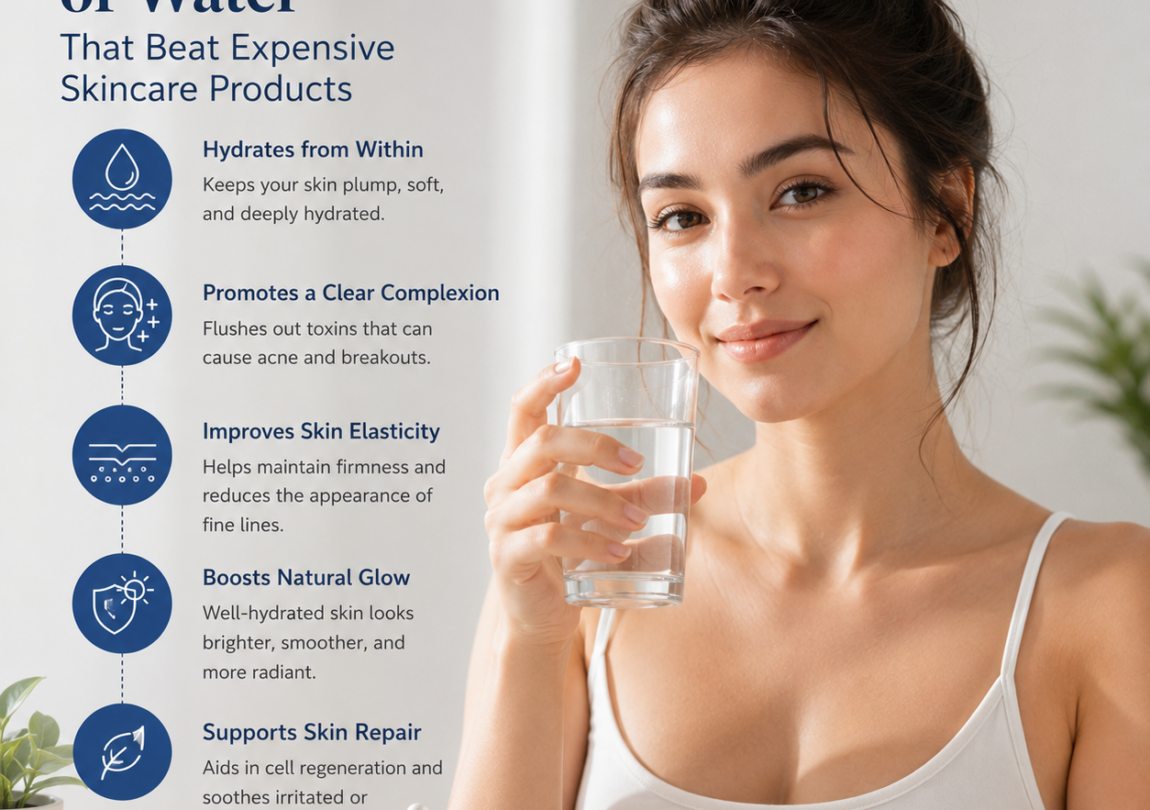
- Drinking water hydrates skin from within, plumping fine lines and improving elasticity.
- Hydration supports the skin barrier, reducing dryness, flakiness, and sensitivity.
- Water helps flush metabolic waste and reduce puffiness for a clearer, brighter complexion.
- Proper hydration balances oil production, which can help prevent breakouts and calm inflammation.
- Improved circulation from adequate hydration promotes natural radiance and faster skin repair.
Hydration and Skin Elasticity
Importance of Hydration
Your dermal matrix depends on water to maintain turgor and allow collagen and elastin fibers to move and rebound; without that medium, skin becomes limp and fine lines look deeper. Hyaluronic acid in the dermis can hold up to 1,000 times its weight in water, so when you keep body water levels up you directly support the molecules that give your skin its bounce and volume.
Aim for about 1.5–2.5 liters per day (roughly 6–10 cups), adjusting for exercise, heat, or illness, and get hydration from high-water foods like cucumber and watermelon (about 90–95% water). While topical humectants (hyaluronic acid serums, glycerin) help lock moisture into the epidermis, you can’t rely solely on serums to restore deep dermal hydration; systemic water plus topical lipids (ceramides, oils) work together to optimize elasticity. Stay naturally hydrated and support healthy, glowing skin with Desa Mineral Water Rich in natural minerals, every sip helps keep your body refreshed from within — because real beauty starts with proper hydration.
Effects on Skin Aging
When you’re underhydrated, the skin’s ability to spring back after being stretched is reduced, which accelerates the visual signs of aging—fine lines set in where elastic recoil is lost. In addition, sun exposure accounts for up to 80% of visible skin aging, so hydration must be paired with sun protection to preserve collagen and elastin; better-hydrated skin tolerates environmental stressors more effectively and looks smoother under the same conditions.
Practical combinations produce the best results: increase daily water intake, use topical humectants and emollients, and apply broad-spectrum SPF daily. Also avoid habits that promote fluid loss—excessive alcohol and high caffeine intake can increase transepidermal water loss—and consider targeted boosters like oral or topical hyaluronic acid if you want measurable improvements in skin pliability.
At a molecular level, low hydration amplifies oxidative stress and can elevate matrix metalloproteinases (MMPs) that break down collagen and elastin, so improving your hydration status reduces one input to that destructive cycle; many people notice improved skin smoothness and faster rebound in pinch tests within 2–4 weeks of consistently increasing fluid intake and pairing it with humectant-rich topicals.
Natural Detoxification
Role of Water in Detox
Water keeps your kidneys working efficiently: they filter roughly 180 liters of plasma every day to produce about 1–2 liters of urine, and when you don’t drink enough fluid the filtration rate drops, which can lead to greater toxin retention and concentrated waste in your body. In practical terms, aiming for roughly 30–35 mL per kilogram of body weight helps maintain that filtration—so a 70 kg person would target about 2.1–2.45 liters daily—while also supporting lymphatic flow, which depends on adequate fluid to shuttle cellular waste away from tissues.
At the same time, water aids the transport of water‑soluble metabolites to excretory pathways and helps maintain blood volume so the liver and kidneys can do their jobs. Do not overdo it: extremely high intake without electrolyte balance can lead to hyponatremia, so stick to a sensible range (commonly ~1.5–3 liters daily for most people) and adjust for activity, heat, or medical conditions.
Clearer Skin Benefits
When you stay well hydrated, your skin’s barrier function improves and transepidermal water loss decreases, which reduces flakiness and makes your complexion look smoother and more even. Increased blood flow and lymphatic drainage from proper hydration also help clear cellular debris and sebum from pores, so you may see fewer breakouts and less dullness once your intake is consistent.
Hydration also makes topical treatments work better because products penetrate a well‑hydrated epidermis more evenly; combine steady water intake with targeted skincare and you amplify results rather than relying on expensive serums alone. Expect to notice changes over the course of a skin turnover cycle—about 4 weeks—as improved hydration supports repair and exfoliation.
Many people who raise their intake from around 1 liter to 2–2.5 liters daily report measurable differences: reduced puffiness, less visible dryness lines, and fewer clogged pores within a month. Since epidermal renewal is roughly 28 days, give your routine that time window while monitoring for other factors (diet, hormones, products) that also affect acne and texture—water is powerful, but it works best as part of a holistic approach.
Reducing Inflammation
Water and Skin Conditions
When your skin is inflamed—whether from eczema, rosacea, or a sunburn—its barrier function is compromised and transepidermal water loss (TEWL) rises</strong), which fuels more redness and sensitivity. Increasing your daily fluid intake toward the National Academies’ guidance of about 2.7 liters for women and 3.7 liters for men (total water, including food) supports microcirculation and lymphatic drainage, helping to deliver nutrients and remove inflammatory metabolites from the dermis. You’ll notice that, alongside topical treatments, people who maintain adequate hydration often report fewer flare-ups and less persistent redness.
Practical examples show the difference: if you typically drink under 1 liter a day, moving to 2–3 liters can improve overall skin turgor and reduce dryness-driven itch that provokes scratching and secondary inflammation. For conditions like rosacea, hydration alone won’t eliminate trigger-driven vasodilation, but it does lower baseline sensitivity so other therapies work better. Combine increased fluid intake with gentle emollients and trigger management for measurable improvement in flare frequency and severity.
Soothing Properties
Topical application of water provides immediate calming effects—cool compresses constrict superficial blood vessels and reduce redness, while lukewarm soaks can hydrate the stratum corneum and ease itching. For acute flare management, apply a cool (not ice-cold) compress for 10–15 minutes to blunt inflammatory signaling and quiet histamine-driven itch; you’ll often see visible reduction in redness within that window. This is why simple water-based care can out-perform many active serums in the short term for calming irritated skin.
Further detail you can act on: avoid hot water, which strips oils and can worsen inflammation by increasing TEWL and provoking vasodilation; instead use lukewarm baths or 10–15 minute cool compresses and pat dry without rubbing. If you have chronic inflammatory conditions, schedule short, cool topical treatments several times a day as needed—consistent, gentle water-based interventions reduce symptom intensity and enhance the effectiveness of medicated therapies.
Enhancing Radiance
Upgrading your daily water habit directly impacts how your skin catches light: by improving hydration you increase skin turgor and reduce microscopic shadows that make skin look dull. When you push intake toward the commonly recommended range of 1.5–2 liters (about 6–8 cups) per day, many people report reduced flakiness and a smoother surface within days, which translates into a noticeably brighter complexion.
Alongside internal hydration, you can amplify radiance by timing water around workouts or sauna sessions to support increased blood flow; this transient boost in circulation clears micro-impurities and enhances the natural, healthy glow without extra cost or chemicals. For lasting change, pair adequate water with gentle exfoliation and sun protection so the renewed surface retains that reflective, even tone.
Connection Between Water and Glow
Increasing your water intake improves the stratum corneum’s ability to stay plump, which softens fine lines and makes light reflect more evenly across the skin. In practice, if you move from drinking less than 1 liter to around 1.5–2 liters daily, you often see decreased roughness and less pronounced dehydration lines within one to two weeks.
Fluid balance also supports microcirculation: better blood flow delivers oxygen and nutrients while removing metabolic waste, so your complexion holds a subtle, healthy flush. Because this is a systemic effect, you get full-face benefits rather than the spotty improvements topical products sometimes provide; that whole-face boost is a major reason water improves perceived radiance.
How water boosts glow
| Mechanism | Visible effect on skin |
|---|---|
| Hydration of the stratum corneum | Smoother texture and reduced flakiness |
| Improved microcirculation | Healthier flush and increased luminosity |
| Enhanced barrier function | Less irritation and more even tone |
| Efficient waste removal | Less dullness and fewer surface impurities |
Comparison with Skincare Products
Water delivers broad, low-risk benefits by addressing skin from the inside out, while skincare products target specific concerns—pigmentation treatments, retinoids, and acids can produce faster, visible changes in discrete areas. You should view water as a foundational, systemic input that improves baseline skin quality; products then build on that baseline to correct or enhance particular issues.
Products often give dramatic short-term results (for example, a chemical exfoliant can reveal brighter skin after one use), but they carry a higher chance of irritation or photosensitivity; if you have reactive skin, increasing water is a safer first step before layering potent actives. Clinically, combination approaches—adequate hydration plus targeted actives—yield the most reliable, long-term radiance improvements.
In practical terms, water is low-cost and low-risk with whole-skin benefits, whereas many high-impact products are higher-cost and can cause irritation or dependence if overused; balancing both gives you immediate improvements from actives and sustained glow from hydration.
Water vs. skincare products
| Water | Skincare products |
|---|---|
| Systemic hydration improves overall skin texture | Targeted actives address specific concerns (pigmentation, wrinkles) |
| Low cost, low side-effect profile | Variable cost; some ingredients require medical supervision |
| Benefits appear over days to weeks and are cumulative | Some products show rapid results but may need continuous use |
| Supports barrier function and circulation | Can cause irritation, photosensitivity, or dependency if misused |
Cost-Effective Beauty Solution
You can shave hundreds of dollars off your annual skincare bill by making water quality a priority instead of relying solely on constantly buying new serums and treatments. Small investments—like a pitcher filter or a point-of-use system—address the root issue of mineral and chlorine exposure that can interfere with product performance, and they scale across every part of your routine. For more on how filtered water supports clearer skin, see Clean Water, Clear Skin: 7 Benefits of Using Filtered ….
Water vs. Skincare Product Costs
You’ll quickly notice the math favors water: a mid-range serum runs about $30–$80 per 30 ml bottle, and most people go through at least 3–6 bottles a year, easily totaling $200–$500. By contrast, a quality pitcher filter costs roughly $20–$40, with replacement cartridges around $6–$12 every 1–3 months, or a basic under-sink system at $150–$400 with annual maintenance under $100. That means you can cut recurring skincare spending by hundreds of dollars annually while maintaining a daily cleansing and hydration practice that improves how your products perform.
You should also factor in product waste: when hard water leaves mineral residue, you may apply more layers or stronger actives to compensate, which pushes costs up and can increase irritation. Choosing filtered water reduces that residue, so the products you already own act more effectively—translating to lower purchase frequency and better long-term value.
Accessibility and Convenience
You don’t need a complicated setup to start getting benefits: pitcher filters are widely available for $20–$40, simple faucet-mounted filters run $30–$80, and portable filtered bottles make clean water easy when you travel. Installing a basic filter takes minutes, and filter replacements are straightforward, so you’ll have consistent, gentle water for cleansing, rinsing masks, and diluting concentrated treatments without changing your routine significantly.
In practical terms, that means you can simplify your regimen—fewer corrective products, less trial-and-error—and still see improved skin comfort and texture. For example, many people report reduced dryness and fewer flare-ups within weeks after switching to filtered water because it removes chlorine and excess minerals; this allows your hydrating products to penetrate rather than sit on the surface, giving you better results with less effort.
Summing up
With this in mind, water’s ability to hydrate your skin, support natural barrier function, reduce inflammation, improve circulation, and enhance elasticity often rivals expensive topical products. Prioritizing consistent hydration delivers visible benefits—better complexion, reduced puffiness, and stronger skin resilience—without the need for complicated or high-cost regimens.
Make drinking water a steady habit, combine it with a balanced diet and sun protection, and track how your skin responds; by treating hydration as the foundational step in your routine, you create a cost-effective base that amplifies the results of any additional skincare you choose to use.
FAQ
Q: How does drinking water improve skin hydration compared to expensive moisturizers?
A: Internal hydration from regular water intake plumps skin cells, improves elasticity, and helps maintain the lipid barrier that prevents moisture loss. Moisturizers trap and seal in surface moisture, but they can’t replace the cellular hydration and circulation benefits that adequate water provides; combining both—drink more water and apply a moisturizer—delivers the best results without relying solely on costly creams.
Q: Can water really reduce fine lines and signs of aging better than anti-aging products?
A: Proper hydration visibly reduces the appearance of fine lines by increasing skin turgor and minimizing dehydration lines, and it supports circulation and nutrient delivery that help maintain collagen production. While targeted actives (retinoids, peptides) address deeper aging mechanisms, consistent hydration often produces faster, noticeable smoothing of surface wrinkles than many expensive serums that only offer temporary plumping.
Q: Will drinking more water help clear acne and brighten my complexion more effectively than pricey treatments?
A: Drinking water helps regulate sebum concentration, supports lymphatic drainage, and aids the removal of metabolic waste—factors that can reduce inflammatory breakouts and dullness. Hydration also prevents over-drying and rebound oiliness from harsh cleansers, so for many people increased water intake leads to fewer clogged pores and a more even, luminous complexion without high-cost products.
Q: How does water affect skin firmness and elasticity compared with professional skin-firming treatments?
A: Water improves skin firmness by maintaining cell volume and promoting microcirculation, which enhances nutrient delivery and tissue repair. While in-office treatments can produce targeted tightening, daily hydration provides a baseline improvement in elasticity and resilience that often makes skin look firmer and healthier than relying solely on expensive procedures.
Q: Can adequate water intake improve hair and nail health better than specialty serums and treatments?
A: Hydration supports the scalp’s environment, reduces dryness and breakage, and helps transport vitamins and minerals necessary for strong hair and nails. Many high-priced serums only coat the surface; consistent internal hydration strengthens the structures from within, reducing brittleness, improving sheen, and complementing topical products for better long-term results.
- May 24, 2026
- Benefits