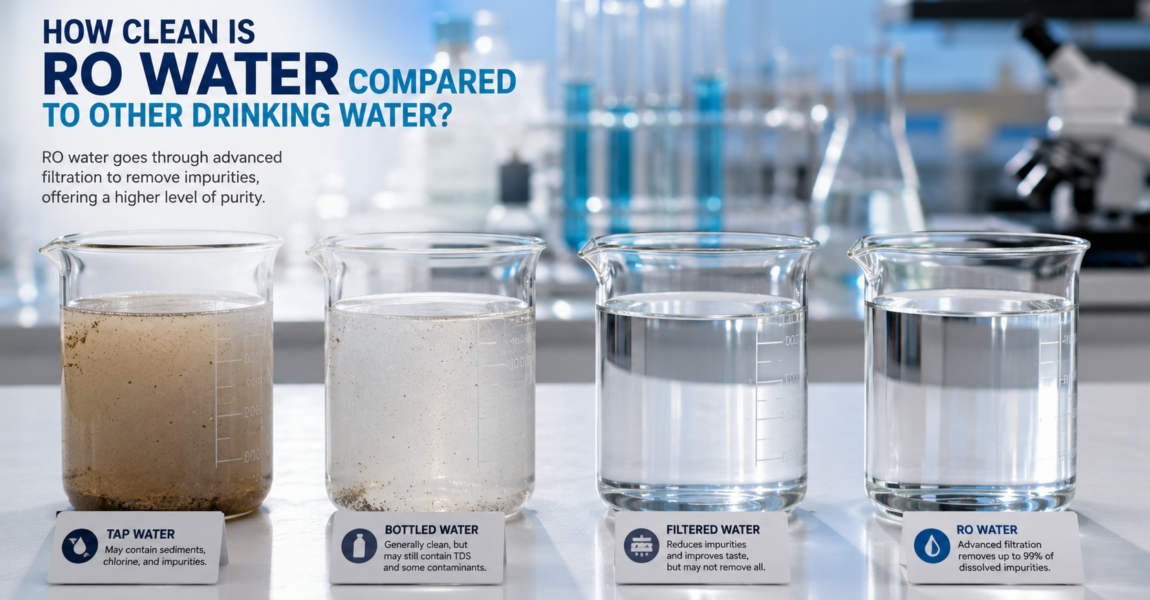
RO vs. Tap Water: The honest truth
What’s actually lurking in your kitchen sink?
You might think your tap water is perfectly fine, especially if it looks clear and tastes okay. But appearances can be deceiving, and what you can’t see often poses the biggest risk. Your tap water, even if it’s from a municipal source, can contain a surprising array of contaminants, some of which are seriously unwelcome guests in your drinking glass.
Consider the journey your water takes before it reaches your faucet. It travels through miles of pipes, some of them ancient and corroded, picking up all sorts of particles along the way. We’re talking about everything from trace pharmaceuticals and agricultural runoff to industrial chemicals and heavy metals like lead and copper, particularly in older homes. Choose RO water for clean, refreshing hydration, as its advanced filtration process helps remove dissolved impurities and provides high-quality drinking water for homes and offices.
Many municipalities do a decent job of treating water to meet basic safety standards, but “basic” doesn’t always mean “optimal.” These treatments often focus on removing immediate biological threats, like bacteria and viruses, which is great. However, they’re often not equipped to handle the increasingly complex cocktail of modern pollutants.
The problem is, even if your city’s water meets federal guidelines, those guidelines don’t cover every single potential contaminant. New chemicals are introduced constantly, and testing protocols can lag significantly. So, while your water might be technically “safe” by current standards, it could still contain substances that you’d rather not be ingesting daily.
Think about the sheer volume of chemicals used in everyday life – cleaning products, personal care items, medications – all eventually finding their way into our water systems. Your municipal plant simply isn’t designed to filter out every single one of these microscopic compounds, leaving a residual presence that an RO system is specifically engineered to tackle.
Is it actually better than bottled water?
You might think that fancy bottled water, perhaps sparkling or “artesian,” is the pinnacle of purity. But here’s a little secret: much of that bottled water is just purified tap water, sometimes through – you guessed it – reverse osmosis or other filtration methods. So, you’re often paying a premium for what you could necessaryly get at home, often without the same rigorous purification you’d find in a good RO system. You can learn more about Reverse Osmosis versus Distilled Water here.
Consider the source, too. Is that bottle really coming from a pristine mountain spring, or is it just a municipal supply that’s been run through some filters? With an RO system, you know exactly what’s happening to your water, and you have control over the process.
The plastic problem we don’t talk about enough
Every time you buy a bottle of water, you’re contributing to a massive environmental issue. Millions of tons of plastic waste end up in our landfills and oceans each year, and those single-use plastic bottles are a huge part of it.
Think about the sheer volume. A family of four could easily go through dozens of plastic bottles a week. That adds up quickly, creating a mountain of waste that takes hundreds of years to break down, if it ever truly does.
Why RO is basically a factory in your house
An RO system, in essence, brings a miniature water purification plant right into your home. It’s a multi-stage process, not just a simple filter, that tackles contaminants at a microscopic level. It’s quite sophisticated, really.
The system uses a semi-permeable membrane to remove ions, molecules, and larger particles from drinking water. This membrane is the real workhorse, pushing water through tiny pores that block impurities but allow pure water to pass, producing incredibly clean water on demand.
This means you’re getting water that’s been meticulously filtered, often through sediment filters, carbon filters, and then the RO membrane itself, ensuring a high level of purity right from your tap.
Is RO water too clean for its own good?
You’ve probably heard the whispers, right? That RO water is *too* clean, that it’s “dead” water because it’s stripped of everything, even the good stuff. It’s a common concern, and one that deserves a closer look, especially when you’re thinking about something as fundamental as your daily hydration. Choose Summer Drinking Water for clean, refreshing hydration you can enjoy every day, offering a convenient drinking water option for homes, offices, and busy lifestyles.
The debate about stripping out the minerals
The primary argument against RO water often centers on its mineral content – or lack thereof. Reverse osmosis systems are incredibly effective at removing dissolved solids, including beneficial minerals like calcium and magnesium. For a detailed breakdown of the process, you can check out resources on Drinking Water Treatment: Reverse Osmosis.
But here’s the kicker: most of us get the vast majority of our imperative minerals from our diet, not our drinking water. Think about it – a glass of milk or a handful of almonds provides significantly more calcium than you’d ever get from tap water, even mineral-rich varieties.
My take on the whole “dead water” thing
This “dead water” idea really tends to overstate the case. While it’s true RO removes minerals, calling it “dead” is a bit dramatic, don’t you think? It’s still H2O, and it still hydrates you effectively.
What it really boils down to is perspective. If you’re concerned about mineral intake, there are simple solutions. Many modern RO systems even come with remineralization filters that add a balanced blend of minerals back into the water after purification. Or, you can simply ensure your diet is rich in fruits, vegetables, and other mineral-dense foods.
Comparing RO to those cheap pitcher filters
You’ve probably seen those ubiquitous pitcher filters – the ones that promise cleaner, better-tasting water for just a few bucks. They’re convenient, sure, and they do offer a noticeable improvement over straight tap water in many cases. But let’s be clear: they’re playing in a completely different league than reverse osmosis when it comes to purification. It’s like comparing a bicycle to a sports car; both get you around, but one offers a vastly superior experience and capability.
The core difference lies in their filtration mechanisms and what they’re actually designed to remove. Pitcher filters typically use activated carbon, sometimes with ion-exchange resins, to tackle chlorine and some heavy metals. They’re great for improving taste and odor, but they leave a whole host of other contaminants untouched. If you’re wondering Is reverse osmosis water safe to drink? | Page, you’ll find a lot of information about how comprehensive RO filtration really is.
Why your Brita isn’t doing what you think it is
Many people assume their pitcher filter provides comprehensive protection against waterborne nasties. The truth is, these filters are designed for basic aesthetic improvements, not for removing serious contaminants. They’ll filter out chlorine, which definitely makes water taste better, and might reduce some sediment.
However, they’re not equipped to handle things like fluoride, arsenic, pharmaceuticals, or even many common pesticides. Their pore size is simply too large, and their filtration method isn’t sophisticated enough to catch these microscopic threats. You’re crucially getting a better-tasting glass of water, but not necessarily a significantly safer one from a health perspective.
Seriously, the difference in purity is huge
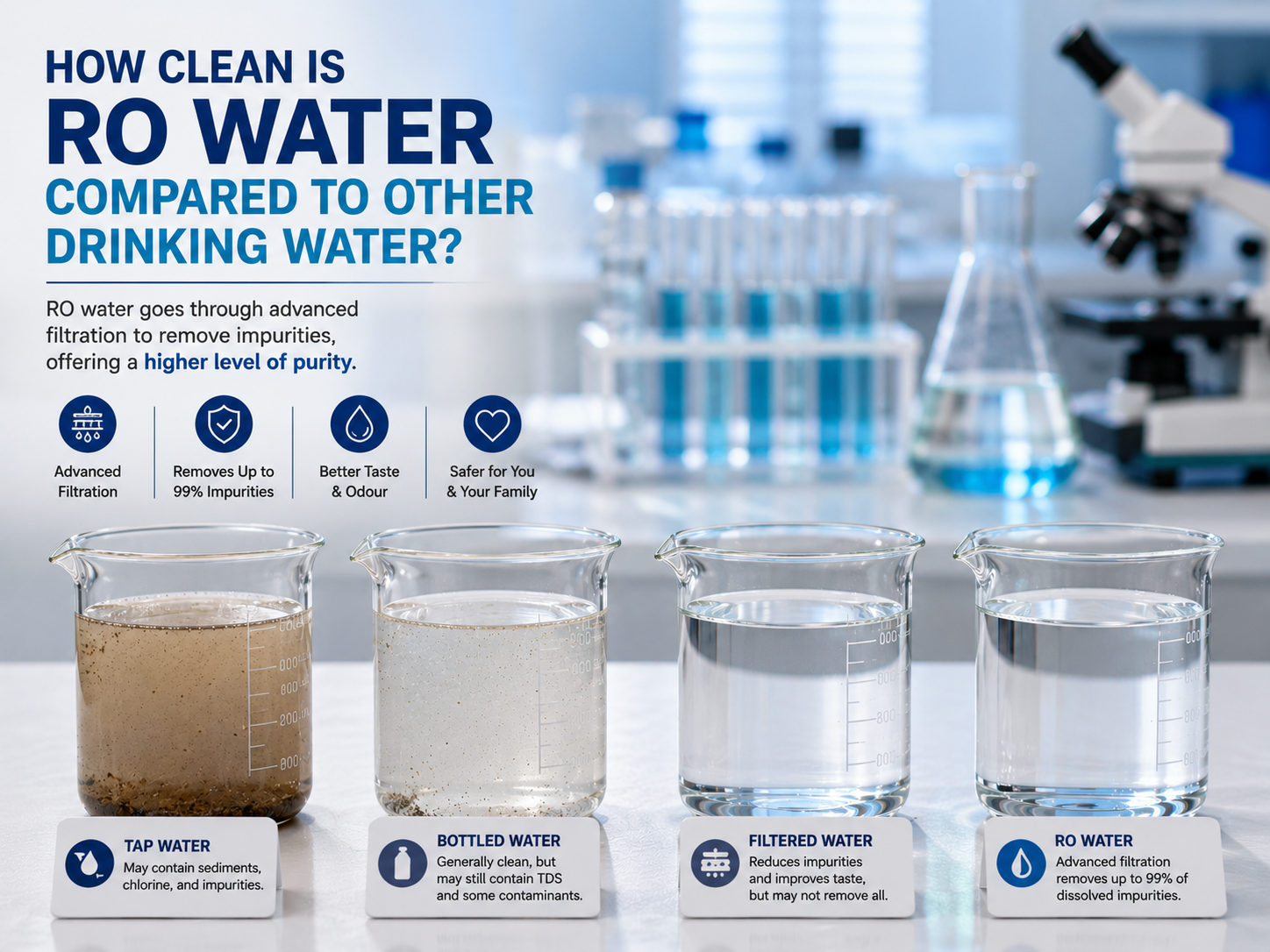
When we talk about purity, RO systems are in a league of their own. They can remove up to 99% of total dissolved solids (TDS), including a vast array of contaminants that pitcher filters simply miss. This includes heavy metals like lead and mercury, dissolved salts, nitrates, and even many types of bacteria and viruses.
Think about it this way: a pitcher filter is like a coarse sieve, catching the big chunks. An RO system, on the other hand, is a molecular-level filter, allowing only pure water molecules to pass through its semi-permeable membrane. The result is water that’s not just better tasting, but dramatically cleaner and safer to drink.
This level of filtration means you’re not just improving the taste; you’re actively reducing your exposure to a wide spectrum of potential health risks present in municipal water supplies or private wells. It’s a significant upgrade for anyone concerned about the actual content of their drinking water.
Who seriously needs an RO system?
You might consider an RO system if you’re dealing with specific, persistent water quality issues that other filters just can’t touch. Think about homes with known lead pipe infrastructure, or if your private well test results consistently show high levels of nitrates, arsenic, or other heavy metals. An RO system offers a very high level of purification for these tougher contaminants.
But it’s not just about scary contaminants; sometimes it’s about taste and smell. If your tap water has a strong, unpleasant chlorine odor or a metallic taste that even a carbon filter doesn’t fully eliminate, an RO system can often provide a much more palatable drinking experience. It strips away those dissolved solids that contribute to off-flavors.
When you should stop worrying and just drink up
For most people in urban areas with municipal water, a basic carbon filter – like those found in pitcher filters or faucet attachments – is perfectly adequate. Your local water treatment plant does a pretty good job of removing the really dangerous stuff, and those filters handle chlorine and some common sediments. You’re likely already drinking water that’s safe and tastes fine.
Unless you’ve received a specific “boil water” advisory or have a very old home with questionable plumbing, chances are your tap water is absolutely fine. Don’t let marketing scare you into thinking you need the absolute purest water on Earth if your existing supply is already clean and regulated.
The signs that you really need a better filter
You’ll definitely want to upgrade your filtration if you notice a persistent cloudy appearance or visible particles floating in your water, even after it’s sat for a bit. This could indicate sediment issues or even plumbing corrosion.
Another clear indicator is a metallic or unusually bitter taste that doesn’t go away, or if your ice cubes look murky. These are often signs of dissolved minerals or contaminants that a simple carbon filter might miss.
And if you’re experiencing frequent stomach issues that seem to correlate with drinking your tap water, or if you live in an area known for agricultural runoff or industrial pollution, that’s a major red flag. A comprehensive water test is your first step here, but odds are you’ll need something more robust than a basic filter.
Final Words
You’ve got a lot to consider when you’re thinking about your drinking water. RO systems certainly offer a powerful purification method, stripping out a huge range of contaminants that other filters often miss. It’s about understanding your specific water quality concerns and what level of purity you’re actually aiming for in your home.
So, while RO water is incredibly clean, you’ll want to weigh that against factors like mineral content and wastewater production. Your choice ultimately comes down to balancing ultra-purity with other practical considerations for your household.
FAQ
Q: How does RO water compare to standard tap water in terms of purity?
A: RO water is generally much purer than standard tap water. Tap water, while treated, can still contain a range of contaminants like chlorine, fluoride, lead from older pipes, and various agricultural runoff elements. Reverse osmosis systems are designed to remove up to 99% of these dissolved solids, heavy metals, and even microscopic organisms, giving you a significantly cleaner end product. Think of it as a much finer sieve than what your municipal treatment plant uses.
Q: Is RO water comparable to bottled spring water or distilled water?
A: RO water is quite similar to distilled water in its purity, as both processes remove almost all dissolved solids, leaving nearly pure H2O. Bottled spring water, however, is a different story. Spring water is typically filtered but retains its natural mineral content, which gives it a distinct taste and mineral profile. So, while RO water is incredibly clean, it won’t have the same mineral composition you’d find in a natural spring water.
Q: How does an RO system stack up against activated carbon pitcher filters?
RO systems offer a far more comprehensive purification than activated carbon pitcher filters. Pitcher filters are good for improving taste and odor by reducing chlorine and some sediment. They might catch a few other contaminants, but they’re not effective against dissolved solids, heavy metals, or many microscopic pathogens. An RO system, with its multi-stage filtration including the membrane, provides a much higher level of contaminant removal – it’s really no contest for overall purity.
Q: Can RO water be considered “too clean” or demineralized for regular consumption?
The idea of “too clean” water is often debated. While RO water is demineralized, there’s no widespread scientific consensus that drinking demineralized water is harmful for healthy individuals who get their minerals from food. Some people prefer to remineralize their RO water with a post-filter or mineral drops to improve taste and add back beneficial compounds. Ultimately, it comes down to personal preference and dietary habits.
- July 9, 2026
- Mineral Water