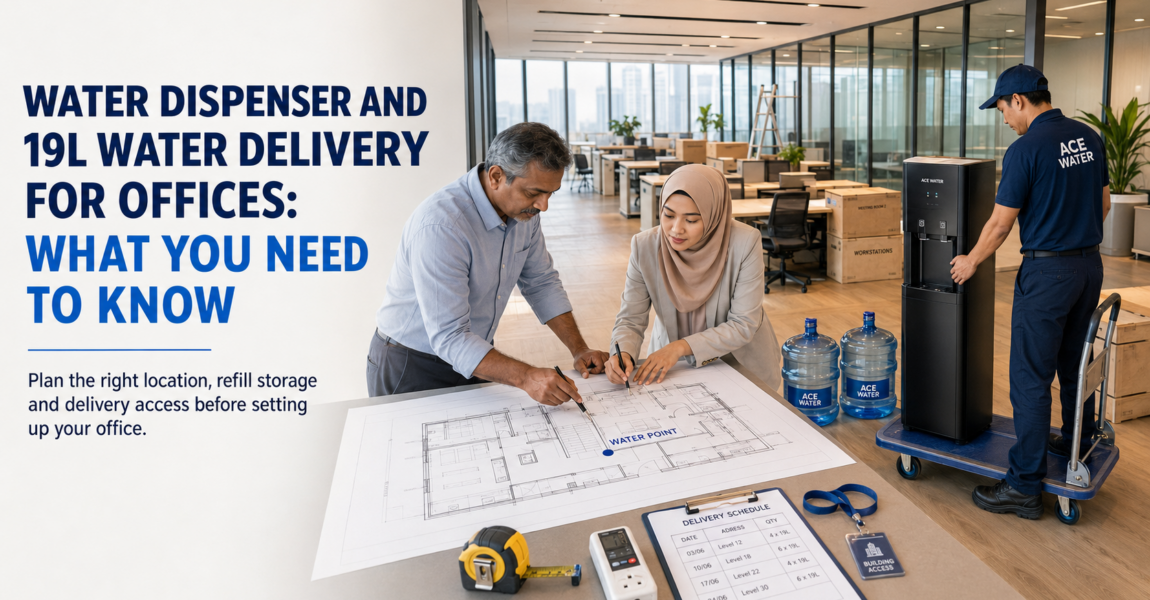
With so many options, choosing the right water dispenser and understanding 19L water delivery for your office can feel overwhelming. You want to ensure your team stays hydrated with clean, accessible water without unnecessary hassle or hidden costs, right? We’ll break down everything you need to consider. A hot and cold water dispenser paired with reliable 19L water delivery provides offices with convenient access to drinking water throughout the working day. With cold water for refreshing hydration and hot water for coffee, tea, or instant meals, it offers a practical solution for creating a more convenient and well-equipped workplace.
Key Takeaways:
- 19-liter water bottles aren’t just big; they’re designed for efficiency, reducing how often you need to swap out bottles and ensuring a steady supply for even busy offices. This means less downtime for your team and more consistent hydration throughout the workday.
- Choosing the right water dispenser involves more than just aesthetics; you’ll want to think about features like hot and cold water options, the dispenser’s footprint in your office, and whether it’s a top-loader or a bottom-loader for easier bottle changes. Bottom-loaders, for example, spare your back from heavy lifting.
- Setting up a reliable delivery schedule is critical to avoid running out of water, especially during peak office hours. Many suppliers offer flexible plans, allowing you to adjust frequency based on your consumption, which can fluctuate with seasons or changes in staff numbers.
- Keeping your water dispenser clean is non-negotiable for health and taste. Regular cleaning – think monthly sanitization – prevents the build-up of bacteria and ensures every sip is fresh. Most manufacturers provide simple cleaning instructions.
- The overall cost isn’t just about the water itself; factor in the dispenser’s rental or purchase price, delivery fees, and potential energy consumption. Some companies offer all-inclusive packages that can simplify budgeting and avoid unexpected charges.
Why’s everyone obsessed with those big 19L jugs anyway?
You’ve seen them everywhere, right? Those massive 19-liter water jugs seem to be the go-to for offices, gyms, and even some homes. But why this specific size? It’s not just an arbitrary number; there’s some real method behind the madness when it comes to keeping everyone hydrated efficiently.
Think about it: a smaller bottle just wouldn’t cut it for a bustling workplace. This particular size strikes a fantastic balance between providing enough water for a decent period without being so huge it’s impossible to move. It’s about practicality and sustained hydration. For offices that need a consistent supply of clean drinking water, 19 liter bottled RO water delivery provides a practical solution for everyday workplace hydration. Combined with a suitable water dispenser, 19L RO water bottles can reduce frequent bottle changes while helping offices maintain a reliable water supply for employees throughout the working day.

They’re actually the perfect size for a busy office
A single 19L jug can serve quite a few people throughout the day, which means less frequent swapping out. Imagine trying to keep a team of ten hydrated with only 5-liter bottles – you’d be changing them constantly, which is a massive time-waster.
This larger capacity also translates to fewer deliveries needed over time. You’re not constantly coordinating drop-offs, freeing up your office manager or whoever handles supplies for more important tasks. It’s about optimizing workflow.
Why you shouldn’t just buy small bottles from the store
Buying individual smaller bottles, like those 500ml ones from the supermarket, might seem convenient at first glance. However, the cost quickly adds up to something truly staggering when you’re supplying an entire office. You’re paying a premium for every single bottle, and that money could be much better spent.
Consider the sheer volume of plastic waste generated by those small bottles. An office of, say, twenty people, each drinking just two small bottles a day, creates forty plastic bottles of waste daily. That’s a mountain of plastic every week, and it’s simply not sustainable or environmentally friendly, even with recycling.
Beyond the environmental impact, there’s also the logistical headache. Storing enough small bottles to last even a week for a medium-sized team requires significant shelf space, and keeping them chilled often means an overstuffed fridge. Plus, someone has to go to the store constantly to replenish stock, which is a drain on resources and time that could be devoted to productive work.
The real deal on picking a dispenser that doesn’t drive you crazy
Choosing a water dispenser for your office isn’t just about getting water; it’s about avoiding daily annoyances. You want something reliable, something that won’t leak all over the breakroom floor or make a racket every time someone fills their glass. Think about the daily traffic it’ll see – it needs to be tough.
And let’s be honest, nobody wants to wrestle with a giant water bottle every time it runs dry. So, ease of use is a huge factor here. You’re looking for a dispenser that simplifies life, not complicates it with awkward refills or constant maintenance calls.
Top-loaders vs. bottom-loaders: what’s the difference?
Top-loaders are what most people picture: that big bottle sits right on top. They’re usually a bit cheaper upfront, and you can easily see how much water is left, which is handy for knowing when to order more. But that also means someone’s got to lift that heavy 19L bottle high up every single time.
Bottom-loaders, on the other hand, hide the bottle in a cabinet below. This means no heavy lifting, which is a massive plus for most offices, especially if you have team members who might struggle with the weight. They often look sleeker too, fitting more discreetly into your office decor.
Honestly, you need a hot water tap for tea and noodles
A cold water tap is a given, obviously, but skipping the hot water option is a mistake you’ll regret. Think about all those chilly mornings when someone just wants a quick cup of tea or instant coffee. It’s a small convenience that makes a big difference to morale.
Beyond hot drinks, consider the lunch crowd. Instant noodles, oatmeal, or even quick soup packets become super easy to prepare. You’re providing a genuine perk that makes the office feel a little more like home, and a lot more accommodating for various dietary needs and preferences throughout the day.
My take on getting the delivery schedule just right
Getting your delivery schedule dialed in isn’t just about avoiding an empty cooler; it’s about optimizing your office’s workflow and budget. You want enough water to keep everyone hydrated and happy, but you don’t want a dozen full jugs cluttering up the breakroom either. It’s a balancing act, for sure.
This is where a good water delivery service really shines. They should be flexible enough to adjust as your needs change, especially if you’re a seasonal business or have fluctuating staff numbers. And hey, if you need to Shop Office Water Coolers & Bottled Water Delivery, make sure they offer reliable scheduling.
Don’t let the office run dry on a Friday afternoon
There’s nothing quite like the collective groan when someone tries to fill their water bottle on a Friday afternoon, only to find the cooler’s bone dry. It’s a small thing, but it can really dampen morale right before the weekend. You’ve got to prevent that scenario.
You should always aim to have at least one or two full backup jugs on hand, especially as you’re refining your delivery cadence. Running out of water is a major inconvenience, and it’s easily avoidable with just a little foresight.
Here’s how to figure out how many jugs you’ll actually need
Estimating your office’s water consumption can feel like guesswork, but there’s a pretty straightforward way to approach it. Think about your average employee’s water intake and multiply that by your total staff count.
Consider that most people drink around 2-3 liters of water a day, and a 19L jug holds, well, 19 liters. So, if you have ten employees, they might go through one jug every day or two.
But don’t forget about factors like hot weather, office visitors, or even if you’re hosting an internal event. These can all spike your consumption. It’s better to overestimate slightly in the beginning rather than constantly running out; you can always scale back once you’ve got a clearer picture of your actual usage patterns over a few weeks.
Is it gross? Keeping your dispenser seriously clean
You’ve probably seen the dust bunnies gather, or maybe a stray coffee splash, but what about the stuff you *can’t* see? A water dispenser, especially in a busy office, can become a breeding ground for some truly unpleasant things if not cleaned properly. We’re talking about biofilms and bacteria that love damp, undisturbed spots.
Regular cleaning isn’t just about appearances; it’s about safeguarding your team’s health. Think about it: everyone’s hands are on that spigot, and water is constantly flowing through internal components. A good Water Delivery Service – Office Water Cooler Dispenser often includes maintenance, which is a huge plus.
Why a quick wipe-down isn’t enough
A quick swipe with a damp cloth might get rid of surface grime, but it won’t tackle what’s lurking inside. The internal tanks, lines, and spigots are where the real action happens – or rather, where the real *growth* can happen. These areas are constantly exposed to water, creating an ideal environment for microbial buildup.
That slimy film you sometimes feel on an unwashed dish? That’s a biofilm, and it can form inside your dispenser too, affecting water quality and taste. Neglecting these hidden areas can lead to potential health issues for your staff.
Easy ways to keep the water tasting fresh
Start by unplugging the unit and draining any remaining water from both the hot and cold tanks. This simple first step prevents accidental shocks and ensures you’re working with an empty system. Then, remove the bottle and the spill guard.
You’ll want to use a mild, food-grade cleaning solution – often a mix of white vinegar and water works wonders – to flush the internal components. Run this solution through both the hot and cold taps, letting it sit for a bit to break down any buildup. After that, rinse thoroughly with fresh water until there’s no vinegar smell left.
Don’t forget to sanitize the drip tray and spigots separately. A small brush can be really helpful for getting into those nooks and crannies around the dispenser nozzles, ensuring no lingering gunk.
What’s the damage? Let’s talk about the actual costs
Figuring out the true cost of an office water solution isn’t always straightforward, and it’s easy to get caught up in just the headline price. You’re looking at more than just the water itself; there’s the dispenser, delivery fees, and sometimes, even sanitization charges. It all adds up pretty quickly.
Initial investments can vary wildly, depending on whether you’re buying a dispenser outright or opting for a rental. But don’t forget the recurring expense of those 19L bottles – that’s where a significant portion of your budget will go month after month.
Hidden fees that’ll drive you crazy
Watch out for those sneaky charges that pop up unexpectedly on your bill. Some suppliers hit you with environmental surcharges for the plastic bottles, or even a fuel surcharge for delivery, especially if your office is a bit off the beaten path.
And then there are maintenance fees. If your rented dispenser breaks down, will they charge you for the service call or replacement parts? Make sure you clarify all these potential extras upfront to avoid a nasty surprise.
Why renting might be better than buying
Renting a water dispenser often means a lower upfront cost, which is a big win for budget-conscious offices. You avoid the significant capital outlay of purchasing equipment, freeing up funds for other imperative business needs.
Plus, many rental agreements include maintenance and repairs as part of the package. This means if something goes wrong with the dispenser, you’re not on the hook for expensive service calls or replacement parts – the provider handles it all.
This hands-off approach also means you don’t have to worry about dispenser obsolescence; when a newer, more energy-efficient model comes out, your provider will often upgrade your unit as part of the ongoing service, keeping your office water solution modern and reliable without extra effort or cost from your side.
Honestly, is all this plastic even okay for the planet?
You’re probably thinking about all that plastic, aren’t you? It’s a fair concern, especially when you consider the sheer volume of 19L jugs an office can go through. The environmental footprint of bottled water, from production to transportation, is quite substantial, and it’s a big part of The Hidden Costs of Bottled Water Dispensers.
The truth about recycling these massive jugs
Most of these large bottles are made from PET plastic, which *is* recyclable in many places. The challenge, though, often lies in the logistics of collection and processing – not every local recycling program is equipped to handle such large, bulky items efficiently.
And even when they are recycled, the process itself consumes energy and resources. It’s not a magic bullet that makes the environmental impact disappear entirely.
Is there a better way to stay eco-friendly at work?
There absolutely is a more sustainable option for office hydration. Consider a point-of-use (POU) water dispenser. These units connect directly to your office’s existing water line, filtering and dispensing water on demand.
This means no more plastic jugs, no more deliveries, and a significantly reduced carbon footprint. You get great-tasting water without the constant parade of plastic, making it a win for both your office and the environment.
Final Words
You’re not just buying a water dispenser; you’re investing in your team’s well-being and productivity. Think about the convenience, the health benefits of easy hydration, and how a well-managed water supply can genuinely improve the daily office experience. It’s a small change that makes a big difference.
Making an informed choice now means you’ll avoid headaches later, ensuring fresh, clean water is always on tap for everyone.
FAQ
Q: How often should we expect 19L water deliveries for our office?
A: Delivery frequency really depends on your office’s consumption. A small office might only need a delivery every two weeks, while a larger, busier one could go through several 19L bottles a week. Most providers offer flexible scheduling, letting you adjust as your needs change – especially helpful during holidays or peak seasons. You’ll typically set up a recurring schedule, but you can usually call in for extra bottles if you run low unexpectedly.
Q: What are the main types of water dispensers available for offices?
A: You’ve got a few options! The most common are bottom-loading and top-loading dispensers. Top-loaders are what most people picture – the bottle sits upside down on top. Bottom-loaders, on the other hand, hide the bottle in a cabinet below, which means no heavy lifting and a much cleaner look. Then there are also plumbed-in units, which connect directly to your water line, eliminating bottles altogether, but they require a bit more installation.
A: It’s smart to look beyond just the per-bottle price. You might encounter rental fees for the dispenser itself, especially for more advanced models with hot and cold features. Some companies charge a delivery fee per trip, or a fuel surcharge. Also, ask about deposits for the 19L bottles – these are usually refundable when you return them. Make sure to clarify all potential charges upfront to avoid surprises.
Q: How do we ensure the water dispenser stays clean and hygienic in a busy office environment?
A: Regular cleaning is non-negotiable for hygiene. You should plan for a quick wipe-down of the spigots and drip tray daily, maybe with a sanitizing wipe. A more thorough cleaning, including flushing the internal lines with a food-grade sanitizer, should happen every three to six months. Many water delivery companies offer maintenance plans or can provide instructions for proper cleaning, which is super helpful.
- August 24, 2026
- Dispenser