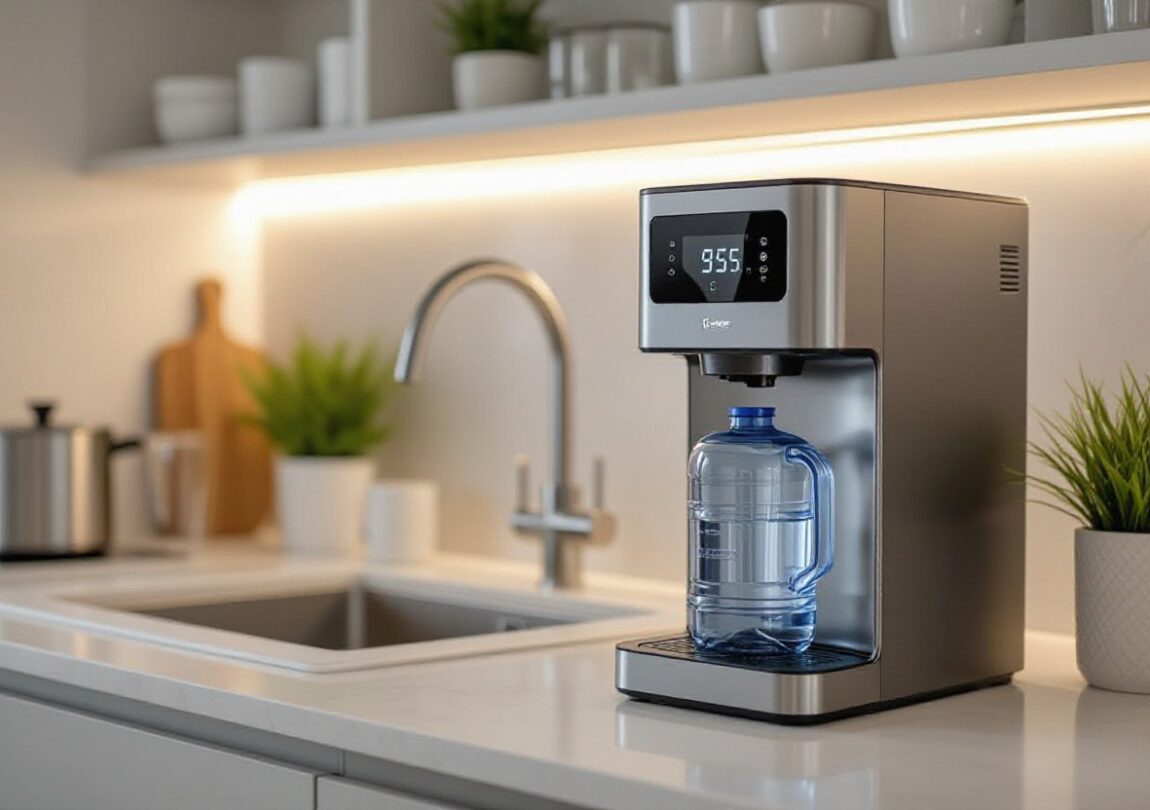
Most households find a water dispenser transforms daily routines: you get instant, temperature-controlled water for drinking, cooking, and cleaning, filtered water reduces contaminants, and built-in safety features help prevent scalds, while cutting plastic waste and saving money, making hydration easier and safer for you and your family. A hot and cold water dispenser makes daily life easier by delivering instant, temperature-perfect water for drinks, meals, and cleaning—saving time, reducing effort, and keeping your family effortlessly hydrated.
- Provides instant hot and cold water for drinks, cooking, and cleaning.
- Saves time by eliminating boiling, cooling, or frequent trips for bottles.
- Makes staying hydrated easier with convenient, visible access.
- Reduces single-use plastic and the need to purchase bottled water.
- Often includes filtration for better-tasting, cleaner water.
Convenience of Access
Across home and office, a nearby dispenser cuts the time you spend fetching drinks; if you make four trips to the kitchen daily at two minutes each, that’s about 8 minutes saved every day. You benefit from consistent portions, fewer single-use bottles, and quicker service for guests-ideal when meetings run long or kids are racing between activities. Practical placement (kitchen, break room, entryway) turns hydration into a one-step habit rather than a detour. An office water dispenser makes daily work easier by providing instant hot and cold water, encouraging regular hydration, saving time, and reducing reliance on bottled water for a healthier, more efficient workplace
Immediate Refreshment
Hot, cold, or room-temperature taps give you instant options: chilled units commonly hold water around 4-10°C (39-50°F), so you can grab ice-cold hydration after workouts or steaming water for tea without waiting. You avoid the lag of refilling kettles or waiting for a pitcher to cool, making it easier to stick to daily intake goals-especially during long workdays or outdoor tasks when quick recovery matters most.
Eliminating Heavy Lifting
A standard 5-gallon jug weighs roughly 42 lb (19 kg), and replacing it multiple times per week quickly adds up: three changes daily over five days equals about 630 lb moved each week. Switching to bottom-load, bottleless, or plumbed dispensers removes those repetitive lifts, lowering your risk of back strain and musculoskeletal injury while freeing staff or household members from bulky handling tasks.
Practical alternatives further reduce strain: a bottleless plumbed dispenser removes the 42 lb lift entirely, while bottom-load units let you slide jugs without overhead lifting. You can also use wheeled caddies for deliveries or choose 2.5-gallon bottles to halve per-lift weight. For workplaces, scheduling deliveries and assigning two-person lifts for larger jugs are simple policies that cut incident reports and downtime linked to manual handling.
Health Benefits
Encouraging Hydration
Easy access to a dispenser makes you sip throughout the day, helping meet guidelines like the National Academies’ ~3.7 L/day for men and ~2.7 L/day for women. Studies show even 1-2% body weight loss from dehydration impairs focus and mood, so having chilled or room-temperature water visible and convenient boosts intake and preserves cognitive performance during work or exercise.
Reducing Contamination Risks
Filtering options such as reverse osmosis and UV treatment let you avoid many tap contaminants; RO systems can remove up to 95-99% of dissolved solids while UV inactivates >99.9% of bacteria and viruses. Plumbed, filtered dispensers reduce reliance on refilled jugs that can introduce mold or fecal bacteria if mishandled, lowering your exposure to waterborne hazards.
Maintenance directly affects safety: change inline filters every 6-12 months and sanitize reservoirs on a schedule-many manufacturers recommend cleaning every 3 months or sooner with heavy use. Following these intervals prevents biofilm buildup that can harbor pathogens such as E. coli and Pseudomonas, and choosing dispensers with sealed, UV-treated outlets further limits contamination in high-traffic settings.
Environmental Impact
Beyond convenience, water dispensers help lower your environmental footprint by cutting single-use bottles and delivery emissions; for example, if 50 employees skip one 16.9 oz bottle per workday, you avoid about 12,500 bottles annually. You can read practical office solutions in Office Water Coolers: Ways to Stay Hydrated at Work, which outlines how on-site dispensers streamline hydration and waste reduction.
Reducing Plastic Waste
You cut single-use plastic by encouraging refillable bottles and installing a plumbed-in or bottleless dispenser; swapping one daily bottle per employee quickly scales to thousands diverted from landfills. For instance, a small office of 20 people avoiding one bottle each workday prevents roughly 5,000 bottles per year, easing recycling loads and lowering procurement costs.
Sustainable Options
You can choose bottleless, plumbed-in units, Energy Star or low-wattage models, and systems with NSF/ANSI-certified filters (such as 42 and 53) to cut waste and contaminants. Combining a dispenser with stainless-steel or glass refill containers further reduces plastic use while maintaining water quality.
Operationally, consider lifecycle factors: filters commonly require replacement every 6-12 months depending on flow and water quality, and a bottleless system eliminates recurring bottle delivery logistics and associated transport emissions. You’ll often recoup higher upfront costs through lower delivery fees and reduced plastic purchasing over a typical 5-10 year service life, making sustainably specified dispensers a practical long-term choice.
Versatility in Use
You can pick from freestanding coolers, countertop units, or point-of-use systems that connect to plumbing, and each serves different daily needs: a standard 5-gallon (18.9 L) bottle fits most freestanding coolers, hot taps often reach about 90°C for tea or instant soup, and cold lines can drop to around 4-6°C for chilled drinks; be aware that hot water poses a burn risk so models with safety locks matter in homes with children.
Home and Office Applications
At home you’ll favor compact countertop or under-sink units that free up cabinet space, while offices typically use freestanding coolers to serve communal areas; a single 5-gallon (18.9 L) bottle yields roughly 75 servings of 250 mL, making it economical for break rooms and reducing single-use plastic if you switch from bottled to dispenser refills.
Adaptable for Different Needs
You can match features to purpose: athletes or cafés often choose high-flow chilled dispensers, labs and clinics opt for systems with 0.2 μm or RO stages that remove up to 99% of contaminants, and families pick models with child-locks and temperature presets to avoid scalding.
For more detail, consider component choices: multi-stage setups typically combine a sediment prefilter, activated carbon to cut chlorine and taste, and an optional RO membrane for dissolved solids-together these can reduce lead, nitrates, and many microbes. You’ll also find UV sterilization options for neutralizing viruses and bacteria without chemicals. Commercial units prioritize flow and durability, while residential systems focus on compact footprint and energy use; selecting the right mix of filtration, temperature control, and safety features lets you tailor a dispenser precisely to your household, office, or specialty setting.
Cost-Effectiveness
Long-term Savings
By switching to a dispenser, you can often cut your drinking-water costs by roughly 50-80% compared with single-use bottled water. A typical 5-gallon refill runs about $6-$12 and supplies ~19 liters, while individual bottled water can cost $1-$2 per liter. You’ll incur small extras – filters ($20-$50/year) and electric dispensers $5-$20/year in electricity – but if your household uses 4+ gallons weekly you can save over $200 annually.
Budget-Friendly Alternatives
Choosing a manual pump, gravity cooler, or a countertop filter pitcher can cut upfront and running costs: manual pumps cost $8-$20, countertop dispensers $30-$80, and pitcher filters $20-$50. You’ll avoid electricity charges and lower per-liter costs versus single-use bottles, though you must be attentive to sanitation; reusing unclean containers increases contamination risk.
Consider delivery subscriptions that drop per-bottle prices to $3-$6 with volume discounts, or buy a used cooler to save 30-60% on capital costs. You should compare per-liter cost plus rental or filter fees, and check for NSF/ANSI-certified filters (42/53) to ensure you’re not trading savings for poorer water quality.
To wrap up
Now you can appreciate how water dispensers streamline routines, offering instant, temperature-controlled water, better hydration habits, reduced single-use plastics, simplified kitchen workflows, and consistent access for guests and family; by saving time, lowering waste, and supporting safety standards, they make daily life more efficient and healthier, so you can focus on priorities rather than fetching and heating water.
FAQ
Q: What are the main conveniences water dispensers provide at home and in the office?
A: Water dispensers deliver instant hot and cold water on demand, reducing time spent boiling or chilling. They centralize hydration so family members and coworkers can serve themselves without queuing. Built-in filters improve taste and reduce reliance on bottled water, saving storage space. Temperature controls support quick beverage preparation and baby formula, while hands-free or foot-pedal models increase hygiene. Many units include indicators and easy-replace cartridges, simplifying upkeep.
Q: How do water dispensers save time during daily routines?
A: With immediate access to regulated hot and cold water, you skip waiting for kettles to boil or jugs to chill. Preparing coffee, tea, instant meals, or baby formula becomes faster, and rinsing or topping up appliances takes fewer steps. In busy offices, dispensers reduce trips to stores for bottled water and cut down interruptive waits, streamlining breakroom workflows and shortening overall task times.
Q: Can water dispensers encourage better hydration and healthier habits?
A: Yes. Visible, convenient dispensing increases the frequency of water intake because grabbing water is quick and effortless. Cold, filtered water appeals more than room-temperature taps, and hot options make warm beverages accessible without added sugars. Filtration reduces taste and odor issues, making people more likely to choose water over sugary drinks, which supports daily hydration goals.
Q: Are water dispensers environmentally friendly and cost-effective?
A: Dispensing filtered or plumbed water significantly reduces single-use plastic bottle consumption, cutting waste and transport emissions linked to bottled water. Over time, the per-liter cost of dispensed water is lower than store-bought bottles, especially in high-use settings. Energy-efficient models and point-of-use installations minimize ongoing energy and delivery costs, though filter replacements and occasional maintenance should be factored into total ownership expenses.
Q: What maintenance and safety features make water dispensers user-friendly?
A: Modern dispensers include features like child-safety locks on hot taps, drip trays, indicator lights for filter and temperature status, and removable reservoirs for cleaning. Routine tasks are limited to filter replacement, occasional sanitizing, and emptying drip trays. Many models offer auto-shutoff, leak detection, or self-clean cycles to reduce manual intervention and enhance user safety and convenience.
- December 17, 2025
- Dispenser