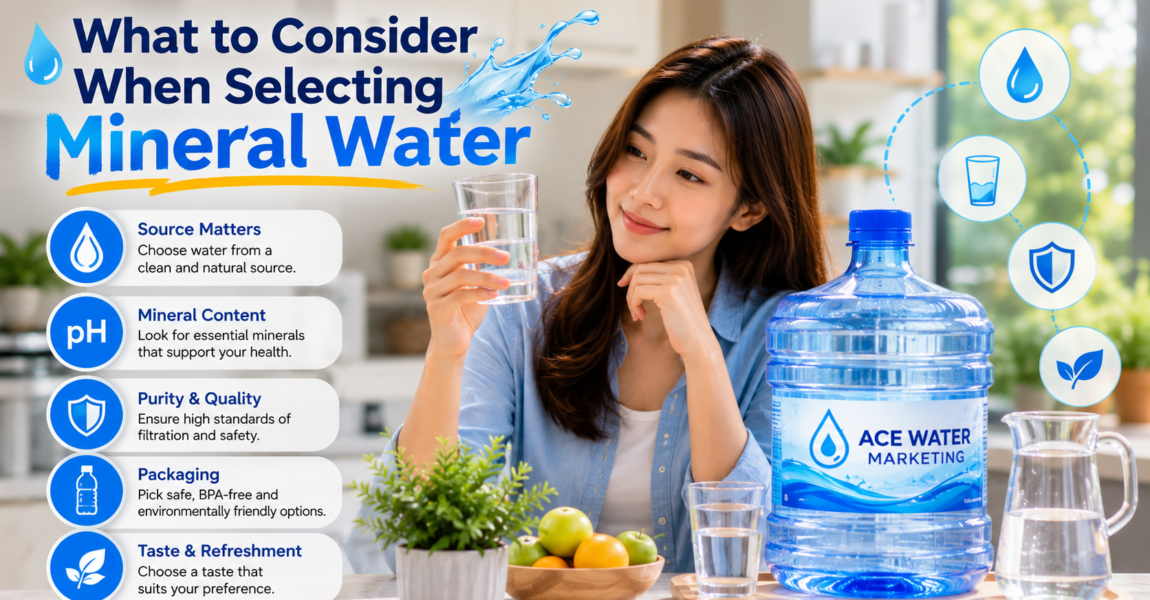
There’s more to mineral water than just a fancy label, isn’t there? You’re not just grabbing any bottle; you’re looking for something that actually benefits you. When choosing, consider the source’s purity and the specific mineral composition. You want to make sure you’re getting minerals like calcium and magnesium, not just trace amounts. And always, always check for potential contaminants to ensure your health isn’t at risk. Choose reliable hydration with our 19-liter bottled mineral water delivery, providing clean, refreshing water for homes and offices with convenient delivery across Kuala Lumpur and Selangor.
What’s actually in that bottle anyway?
You’ve probably picked up a bottle of mineral water and seen a dizzying array of numbers and names on the label, right? It’s not just fancy branding; those details tell you a lot about where the water came from and what natural goodness – or not-so-goodness – it carries. Each mineral water has a unique fingerprint of dissolved solids, making one bottle distinctly different from the next.
Consider this: the source of the water profoundly impacts its composition. Water flowing through volcanic rock will pick up different minerals than water filtering through limestone, and understanding these subtle differences is key to making an informed choice for your health and taste buds.
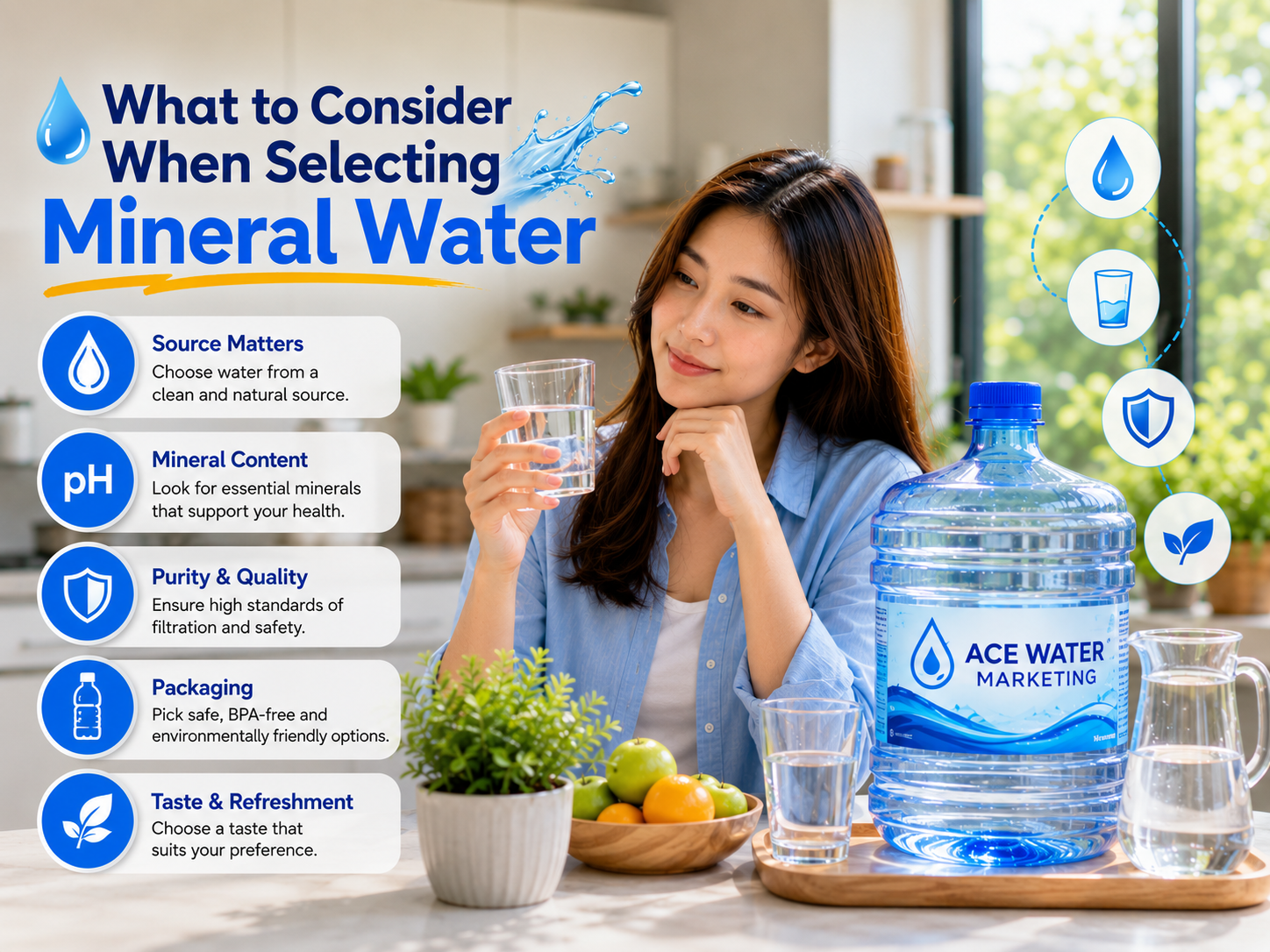
The lowdown on TDS levels
Total Dissolved Solids, or TDS, is a big one to look for on the label. This number basically tells you the combined concentration of all the inorganic and organic substances present in the water, everything from minerals like calcium and magnesium to trace elements. A higher TDS usually means a water richer in minerals. Choose Desa Mineral Water 500ml for clean, refreshing hydration wherever you go. Ace Water Marketing offers fast delivery across Kuala Lumpur and Selangor, making it easy to enjoy quality mineral water every day.
A low TDS level, say below 50 mg/L, often indicates water that’s been heavily filtered or is naturally very pure, sometimes described as “soft.” On the flip side, some mineral waters boast TDS levels exceeding 1000 mg/L, offering a more robust mineral profile, but it really depends on what you’re looking for, doesn’t it?
Why magnesium and calcium matter most
Magnesium and calcium are the power couple of mineral water, seriously. These two minerals are the most abundant and, frankly, the most impactful on your body when you’re hydrating with natural mineral water. They play roles in everything from bone health to muscle function.
Think about it: your body needs a steady supply of these electrolytes, and getting them naturally through water can be a fantastic way to supplement your diet. Many people don’t get enough magnesium, for example, and mineral water can be a surprisingly effective source.
Your bones, muscles, and even your nervous system depend heavily on adequate levels of both calcium and magnesium. Calcium is necessary for strong bones and teeth, helping to prevent conditions like osteoporosis, while magnesium contributes to over 300 enzymatic reactions in the body, supporting everything from nerve function to blood sugar control. A good balance of these two minerals in your water can significantly contribute to your overall well-being, but be aware that excessively high levels of any single mineral, including calcium, can sometimes be problematic for certain individuals, particularly those with specific kidney conditions. Conversely, too little magnesium can lead to fatigue and muscle cramps, so finding that sweet spot is important.
Bubbles or no bubbles: what’s your vibe?
You’ve probably noticed that not all mineral waters are created equal when it comes to fizz. Some waters sparkle with a natural effervescence, while others get their bubbly personality from added carbon dioxide. Your preference for still or sparkling water plays a big role in your selection, but understanding the difference between naturally carbonated and artificially carbonated mineral water is pretty important.
Choosing between the two isn’t just about taste; it also impacts the water’s natural properties and how your body interacts with it. Do you want that gentle tickle or a more aggressive pop?
Natural carbonation is just way better
Some mineral waters emerge from the earth already carbonated, a true gift of nature. These waters absorb carbon dioxide from underground volcanic activity, giving them a delicate, often fine, and persistent effervescence. This natural process means the bubbles are intrinsically linked to the water’s unique mineral composition.
The subtle fizz in naturally carbonated waters often feels smoother on the palate, enhancing the water’s inherent flavors without overwhelming them. You’re tasting a geological masterpiece, really.
Why added CO2 isn’t always a win
Many sparkling mineral waters achieve their fizz through the addition of carbon dioxide during bottling. While this method certainly creates bubbles, it can sometimes alter the water’s natural profile. The added CO2 might be less integrated with the water’s minerals, leading to a harsher, more aggressive carbonation.
Sometimes, the introduction of external CO2 can even slightly change the water’s pH, which might affect how your body absorbs the minerals. It’s not necessarily bad, but it’s different.
This artificial carbonation process can sometimes overpower the subtle nuances of the mineral water’s original taste. Think about it: when you’re adding something external, it inevitably interacts with what’s already there. The carbonation from added CO2 can be quite sharp, potentially masking the unique terroir of the water and making it taste more generic, like any other carbonated drink, rather than a distinct mineral water. You might also find that the bubbles dissipate faster, leaving you with a flatter experience sooner than you’d expect from a naturally sparkling option.
Is it really doing anything for your health?
You might be wondering if all this talk about mineral water actually translates to real health benefits. Different mineral waters deliver varying concentrations of minerals, which can certainly impact your body. To really understand what’s happening, check out this great resource on Bottled waters – how to choose the right water for yourself?, it explains a lot.
Just how much good a specific water does for you depends entirely on its unique mineral composition. Some waters are fantastic for replenishing electrolytes after a workout, while others might offer a gentle boost of magnesium. It’s not a one-size-fits-all situation, so knowing what’s in your bottle matters.
The truth about pH levels and your body
People often get hung up on the pH of their drinking water, thinking a higher pH means better health. Your body, though, is incredibly good at maintaining its own pH balance, no matter what you drink. It has complex systems in place to keep things stable.
Drinking alkaline water won’t magically change your body’s pH to be more alkaline. Your stomach acid is incredibly strong, and it neutralizes pretty much anything you put into it. So, don’t stress too much about the pH number on the label.
Seriously, don’t ignore the sodium content
Have you ever checked the sodium content on your mineral water bottle? Many people don’t, and that’s a mistake. Some mineral waters, especially those from certain geological regions, can be surprisingly high in sodium.
If you’re already watching your sodium intake, perhaps due to blood pressure concerns, then choosing a low-sodium mineral water is absolutely critical. You don’t want to unknowingly add extra sodium to your diet through your hydration.
This isn’t just a minor detail; it can genuinely affect your overall sodium consumption. Always look at the label, especially if you drink a lot of mineral water. Choosing a water with very low sodium can make a real difference for your health.
Why does some water taste like actual rocks?
You’ve probably noticed that not all water tastes the same, and sometimes, it’s like you’re drinking directly from a quarry. That strong, earthy, or even metallic flavor isn’t just in your head; it’s a direct result of the dissolved minerals picked up on the water’s journey. You can learn more about The Mineral Content of US Drinking and Municipal Water if you’re curious about what’s in your tap.
Decoding the flavor profile of minerals
Calcium and magnesium, often found together, contribute to what’s known as “hard water” and can give water a slightly chalky or even sweet taste. You might also detect a bit of a metallic tang from iron, especially if it’s present in higher concentrations. These minerals, in varying amounts, create a unique flavor signature for each water source.
What about sodium? It makes water taste salty, obviously, but in smaller amounts, it can actually enhance other flavors, making the water feel smoother. Potassium, another common mineral, often contributes a slightly bitter or even medicinal note, though it’s usually less pronounced than others.
Here’s why you might hate high-sulfate water
Have you ever taken a sip of water and immediately thought of rotten eggs? That distinctive, unpleasant smell and taste are almost certainly due to sulfates. Sulfates are naturally occurring compounds, but when their concentration gets too high, they can make water genuinely unpalatable.
This isn’t just about taste, though. High levels of sulfate can also have a noticeable laxative effect, which is definitely something to be aware of if you’re sensitive. So, if your water tastes funky and you’re experiencing stomach issues, sulfates could be the culprit.
The real deal about plastic vs glass
You’ve probably stood in the aisle, staring at rows of water bottles, wondering if there’s a real difference between the plastic and glass options. It’s not just about aesthetics; your choice of container can impact the water itself and your well-being. Thinking about What to Look for in a Smart Mineral Water extends beyond just the source, you know?
Plastic, for all its convenience, comes with some serious questions. You really should be aware of potential chemical leaching, especially when bottles are exposed to heat or sit for extended periods. Glass, on the other hand, offers a much more inert and protective environment for your precious minerals.
Why I’m mostly switching to glass bottles
I’ve been making a conscious effort to grab glass bottles whenever possible. The taste, for one, just feels cleaner, purer somehow. There’s no hint of that “plastic-y” aftertaste that sometimes creeps in, making the whole experience much more enjoyable.
Another big reason is the peace of mind. Knowing my water isn’t absorbing anything unwanted from the container is a huge win for me. It’s a small change, but it feels like a significant step towards healthier hydration.
Don’t fall for the fancy marketing tricks
You’ll see a lot of brands trying to upsell you on “eco-friendly” plastics or bottles with sleek designs. Don’t let the pretty labels distract you from the core issue. Many of these plastic alternatives still pose potential health risks, even if they claim to be better for the planet.
Marketers are clever, they really are. They’ll use buzzwords and imagery to convince you that their plastic bottle is somehow superior. Just remember, a fancy design doesn’t change the fundamental properties of plastic or its interaction with the water inside. Always look beyond the superficial.
FAQ
Q: What’s the big deal about mineral content in water, anyway?
A: You know how sometimes you feel a little flat, even after drinking a bunch of water? That’s often because plain filtered water, while hydrating, doesn’t put back the good stuff your body uses up. Mineral water, on the other hand, comes straight from underground sources, picking up a unique blend of minerals like calcium, magnesium, and potassium along the way. Your body needs these for everything from nerve function to bone health. Think of it like a natural electrolyte boost, without any added sugars or artificial flavors.
Each brand has its own mineral fingerprint, too. Some might be high in calcium, making them great for bone support, while others could have more magnesium, which can help with muscle relaxation. It’s not just about quenching your thirst; it’s about giving your body a little extra something to thrive on. Checking the label for the “Total Dissolved Solids” (TDS) number gives you a quick snapshot of how mineral-rich it is – a higher number usually means more minerals.
Q: Does the source of the water really make a difference in its quality or taste?
A: Absolutely, it makes a huge difference! Imagine wine from different vineyards – they all come from grapes, but the soil, climate, and region give each one its distinct character. Mineral water is kind of like that. Its source, whether it’s a spring high in the Alps or an aquifer deep under volcanic rock, dictates everything from its mineral composition to its pH level and even its unique taste profile.
Water that filters through ancient rocks picks up different minerals than water from a younger, more active geological area. This natural filtration process isn’t just about cleanliness; it’s about the water absorbing the very essence of the earth it flows through. You might notice some waters have a slightly sweeter taste, others a chalkier feel, and some a crisp, clean finish. This variation is all thanks to where it came from. Knowing the source can also give you confidence in its purity, since these underground reservoirs are naturally protected from surface pollutants.
Q: I’ve heard about pH levels in water. Should I be worried about that when picking mineral water?
A: People talk a lot about pH these days, and it can sound a bit scientific, right? pH basically measures how acidic or alkaline something is, on a scale of 0 to 14. Seven is neutral. Your body works hard to keep its own pH balanced, and while drinking water won’t drastically change your internal chemistry, it’s still something to consider.
Most natural mineral waters fall into a slightly alkaline range, usually between 7 and 8.5. Some folks prefer this, believing it can help counteract the acidity of modern diets. Other waters might be more neutral. It’s not about one being “better” than the other for everyone; it’s more about personal preference and what feels good to your body. You’ll find the pH listed on the bottle, so you can easily check if it aligns with what you’re looking for.
Q: What about plastic bottles versus glass? Does that matter for mineral water?
A: This is a question many of us ponder while standing in the grocery aisle. The container choice definitely matters, and not just for environmental reasons. Concerning taste and purity, glass is often the preferred option for mineral water. Glass is inert; it doesn’t interact with the water inside it, meaning the water’s natural taste and mineral profile remain exactly as they should be.
Plastic, on the other hand, can sometimes leach tiny compounds into the water, especially if the bottle gets warm or sits for a long time. You might not always notice it, but some people are very sensitive to these subtle changes in taste. Plus, glass bottles just feel a bit more luxurious, don’t they? And from an environmental perspective, glass is infinitely recyclable, making it a more sustainable choice if you’re trying to reduce your plastic footprint.
Q: How do I know if the mineral water I’m buying is actually “natural” and not just flavored or enhanced tap water?
A: That’s a really smart question, because the market can be a bit confusing sometimes. The key is to look for specific labels and claims on the bottle. True natural mineral water comes from a protected underground source and is bottled directly at the source without any processing that would alter its original composition. They can’t add or remove minerals, or disinfect it with chemicals like chlorine.
Look for terms like “Natural Mineral Water” or “Spring Water” on the label. These classifications usually mean the water meets strict regulations regarding its origin and purity. If you see “purified water with added minerals” or “drinking water,” that’s usually tap water that’s been processed and then had minerals put back in. While those can be fine, they aren’t the same as water that naturally picked up its mineral goodness from the earth. A reputable brand will always clearly state its source and mineral analysis on the label, giving you full transparency.
- June 26, 2026
- Mineral Water